Table of Contents
Introduction
This internship journey began during a time when I was drowning in self-doubt, defeat, and a sense of purposelessness. My first semester of MCA at VSSUT had just ended, and by mid second semester, around February 2025, I was feeling hopeless.
In that duration, a message popped up in our college TNP WhatsApp group. A company from Bhubaneswar was conducting interviews for a summer internship at OUTR. The tech stack they were looking for? JavaScript, React, and optionally Ruby on Rails. At the time, I was so mentally checked out that I didn’t think much of it. But seeing familiar tech in the requirements, I applied. And guess where I filled out the form? In the bathroom. Yep, the hostel washroom. (Don’t judge, everyone scrolls their phone there!)
Of course, my CV wasn’t even ready. I had already received several emails asking for it, and I still hadn’t uploaded it. When a few friends told me they were planning to go to Bhubaneswar for the interview, I debated whether I should join. Deep down, I believed there was no way I’d crack it, no DSA prep, and the entire first year of MCA had been more about dealing with depression than studying.
But the night before the trip, I had a moment of clarity: “What’s the worst that could happen? I won’t get selected? Fine. At least I’ll get interview experience… and maybe a good day roaming around Bhubaneswar.”
So I took the chance. Packed my bag. And yes, believe it or not, I left for the interview without a laptop.
Interview
Mindset
When I reached Bhubaneswar the day before the interview, I was mentally prepared to get knocked out in the very first DSA round. I had zero expectations of making it through that part. But deep down, I had this quiet confidence that if I somehow reached the interview stage, I’d do well. Why? Because, well my communication skills are okay. Okay, let’s not be very humble, they’re actually pretty good.
A few weeks earlier, I had taken part in a soft skills program where I learned a lot about how to carry myself, things like appearance, body language, and vocal tonality. That gave me an extra edge. Plus, even though I hadn’t been productive for most of my first year in MCA, I did have a 5-month internship experience behind me. And I made sure to understand the basics of JavaScript really well.
But still, since I had already assumed I’d be out after the DSA round, I didn’t bother to prepare for it. No brushing up, no problem solving drills, nothing. I went in with the mindset: “Whatever happens, happens.”
Day of Interview
When we reached Bhubaneswar, we found out, we were supposed to bring our own laptops. And guess what? I hadn’t brought mine. But by some stroke of luck, the friend I was traveling with had some amazing connections. Not only did her friends help us find a place to stay, but they also arranged laptops for us. I’m genuinely grateful especially to my friend for sorting one out for me too.
The next morning, we woke up around 6 AM, booked an Uber, and set off, ready to let fate take its course.
Pre-Placement Talk
Around 10 AM, the pre-placement talk began. It was delivered by none other than the CEO Suman Ranjan Panda. When he stepped on stage and introduced himself, I was honestly surprised. I didn’t expect someone so young, so grounded, and so humble to be leading a company. But the real surprise came as he spoke.
Everything he said about the company, the work culture, the expectations, the hunger for growth, resonated deeply with me. He spoke about being workaholic, giving your all to learning and building, being passionate, and dreaming of leadership. He talked about things like blogging, open source contributions, and startup life. Each word felt like it was directly connected to the goals I had buried inside me.
That talk flipped a switch. I said: “God, I want this. I’m going to give it my 100%.”
In that moment, I just knew, this was where I could grow. I could learn not just tech, but real-world discipline, mindset, and purpose. I instantly decided that if I didn’t make it through the round, I’d still reach out to him on LinkedIn.
I knew that from this man I can learn a lot, and I indeed learnt a lot from him in future.
DSA Round
Finally, it was time for DSA Round. It had two parts: one DSA problem-solving round and the second, an MCQ round, each lasting 60 minutes.
I spent the entire first hour stuck on one coding question… and even then, I could only pass two test cases. The MCQ round wasn’t great either. The people I knew, who practiced DSA regularly must’ve done way better. They were disciplined, consistent, and sharp. That was far from my reality.
But once we all walked out of the exam hall, I started hearing the same thing from others too. Turns out, while the questions were fairly easy, many struggled to solve them in JavaScript. Most were used to practicing in other languages.
While some friends, disappointed, started planning to head out and make the most of the remaining, my intuition told me to wait until the result is out.
Just as I sat down to finally grab a bite (fun fact: I didn’t have food that day till 10 PM, busy all day giving interview), my phone buzzed with the result message. My heart started racing. Scrolling through the list of selected names, I braced myself… And then, there it was “Swagatika Mohapatra.”
My mind started running fast with excitement and panic, I cancelled my food order immediately, rushed to get photocopies of my documents (which, by the way, were never used, and I wasted ₹150 in the process), and sprinted back to the college for the next round.
Interview Round 1
While preparing for Round 2 and my first interview, the first guy from our class was called in. After studying nearly a year in college, I didn’t even know of his existence, let alone his name, and I felt too awkward to ask how his interview went or what questions were being asked. (Later, our bond grew so well that I now consider him a brother, with full bro code 😉.)
I practiced all the important questions that could be asked, promises, async operations, closures, etc. The first round was virtual and went well. I was asked to write code on the exact concept I had revised just 5 minutes before. I did struggle a bit with a React state management question since it had been over 8 months since I last looked at React code. But I told myself, “You know this, you just don’t remember the syntax. Focus, and you’ll crack it.” The interviewer asked me to use Google, but I said I’d try on my own. With a few hints from him, I made it functional. I thought it went well and was expecting the next round.
Interview Round 2
In this round, I was asked about my projects. And all I could think was, I had done an internship in React Native, but the project was private and on my old GitHub account. My current GitHub had no React Native projects. I was sure they’d think I was lying. And in my resume, being the stupidest person in the world, I hadn’t added links to any of my projects. I had added a link to my blog website. It had an unprofessional photo, some immature blogs, and luckily, a link to my GitHub. But even then, the projects listed there weren’t anything impressive.
The blog was built using a Jekyll GitHub template, but the interviewer thought I had made it from scratch. He started asking how I created it. I explained that I used a Jekyll template and write my blogs using Emacs org-mode (trying to show off that I knew Emacs and was cool). He said he was a Vim user and moved on.
He gave me a question to solve and asked some React questions, like what is Virtual DOM, React Navigation, etc. I solved the coding question since it was similar to the one from the last round. But I couldn’t answer some of the React questions properly.
And wait, you don’t know the blunder I made.
Out of nervousness, panic, and my desperate attempt to show that I “knew things” I kept interrupting the interviewer. Later, I was told I had made an impression of being impatient, overconfident, and not ideal for teamwork.
HR Round
It was already late by the time my round 2 was over, maybe 8 o’clock. And I was waiting to know if I was selected for the next round.
After a long wait, I was told that I was selected for the HR round, and it was in person, taken by Suman Ranjan Panda. (Okay, now finally I can use my soft skill program knowledge.) I went in with a mild smile, covering my nervousness with confidence (which later was told as overconfidence), keeping my body straight, taking care of my hand movements.
At first, he asked me some normal questions, about me, my hobbies, education, then he asked me some critical thinking questions about how to handle a certain situation. And then finally, I was asked to draw a simple database system and write a query for it. God knows what I wrote (I was cursing myself, “Swagatika, at least you could’ve studied this subject properly in class”). But anyway, I came out of the interview without any confidence, but with some hope of a miracle.
Oh, yeah, I haven’t told you the blunders I made again. In my CV, being the stupid person I am, I wrote the year of my B.Sc. passing as 2029. And again, I was also interrupting the CEO of the company while he was talking. Like seriously, can you believe it?
The Result
We were told that we would get our results on Saturday or Sunday. But even after Sunday passed without any announcement, I messaged Suman on LinkedIn, expressing my interest in working at his company. I also sent him my previous internship certificate, a referral email screenshot, and an updated resume. I mentioned that I wished to join as a React Native intern.
I didn’t get any reply.
Then on Monday, while I was sitting in the library, a BTech girl, whom I recognized from the soft skills program, came up to me and congratulated me. Completely flabbergasted, I asked her why. She said, “You got selected for the company!”.
But wait, I also got a message from Suman requesting a meeting.
After two cancellations, the third time, the meeting finally happened. He explained that he wanted to speak with me because he had doubts about taking me in. He had noticed some behavioral issues, like impatience, poor listening skills, and was unsure if I can work with a team. But since I accepted my faults sincerely, he decided to give me a chance.
And hurray, I got the summer internship! 🥳
My first internship interview (offline, of course). I cracked it, from seeming impossible to becoming reality.
Internship
Pre Internship Duration
Before starting our internship, we were expected to complete HTML, CSS, JavaScript, and React from BigBinary Academy. We also had JavaScript and React assessments scheduled before joining the office. During this period, we focused on building a solid understanding of the basics and practiced through projects.
We had deadlines for chapters and projects, along with virtual weekly meetings where one of our seniors would check our progress, ask questions, and help clear our doubts.
But with college distractions, exams, projects, and assignments, we fell behind and couldn’t finish up to React before joining the office on May 12.
3-Month Internship
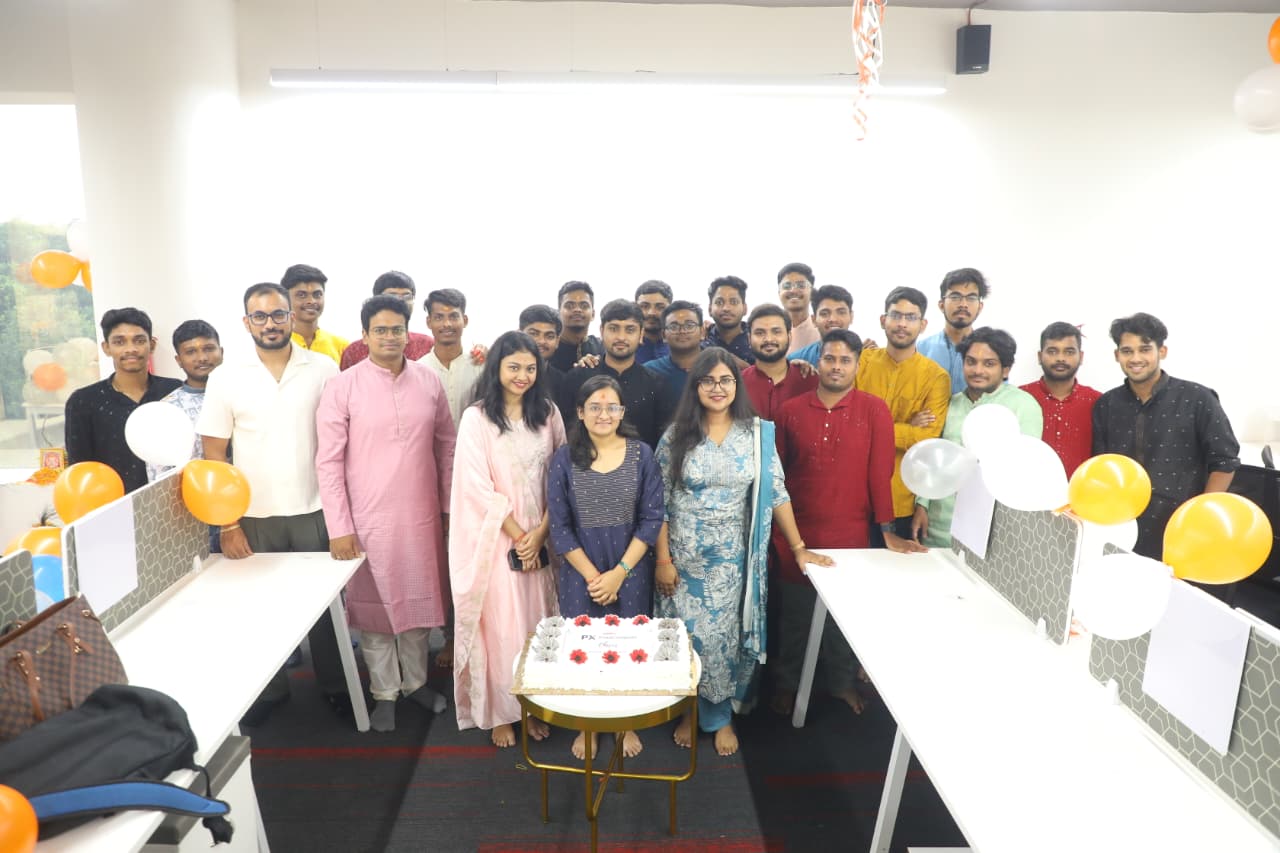
We joined the office on 12th May (I say “we” because along with me, four guys from our college also joined the internship). On our very first day, we were supposed to take the JavaScript assessment and all of us from VSSUT failed it.
We took another five days to practice the exercises, and I cleared the assessment the second time.
Then came the React course. It wasn’t just about learning React basics, it was about writing production-level React code, understanding deep concepts, and learning how to write code efficiently.
What really impressed me was how we were taught the industry standards, what good code looks like, what to avoid, what’s efficient and what isn’t. But it wasn’t just about code.
I really appreciate Suman for spending a good amount of time with us, not just explaining company policies, but also guiding us on the right attitude, the value of communication, meeting deadlines, and being efficient to build a good career.
He personally guided me on my weak points, helping me understand how to improve, not just to survive there, but to grow in my career and as a person. One major thing he kept pointing out was my need to develop more patience. He emphasized how patience directly affects the quality of work, team collaboration, and how we take feedback.
Why I Quit
Where It All Started
After the JavaScript assessment, we were supposed to start the React course. But not realizing the importance of deadlines, I ended up wasting 3-4 days configuring Emacs for React because my old dual-booted system couldn’t run VS Code. That’s how I missed my first deadline.
The office then provided us with laptops, and I began working day and night to meet the deadline. When I say “day and night,” I mean sleeping just 3-4 hours a day and working the rest.
Then came the project deadline. Because I was constantly exhausted and short on time, I didn’t read the chapters properly and somehow managed to submit on time. But that backfired during the assessment, where I had to build a project using best practices.
I struggled again same loop: working late nights, getting stuck, asking my mentor for help. She got frustrated and told me I wasn’t reading instructions properly or understanding the material well enough.
I remember, it was Thursday when my parents came after a 12-hour journey just to see me, but I didn’t show up until 1 PM on Sunday, the day they were leaving with return tickets for 6 PM. I felt awful. I couldn’t spend proper time with them, and I was barely functioning, sleep deprived from the last two days and running on just 4-5 hours of sleep daily for a week.
Then I was told that I don’t take deadlines seriously and always come up with excuses at the last moment. That sentence hit me hard and truly demotivated me. I became scared of deadlines. I started thinking, what’s wrong with me? Why are others finishing things quickly and calmly, while I’m sacrificing my health and still struggling?
Eventually, the stress, both mental and physical, started to take a toll. My chronic urticaria flared up badly, especially around deadlines. The lack of balance, the constant effort without visible progress, and watching others achieve more with less effort shattered my confidence and self-esteem.
I already felt underqualified, especially knowing I didn’t clear the DSA round. And then came the fear: fear of deadlines, fear of what my boss or mentor thought of me, constant self-comparison.
On top of that, the work environment was unstable, people were getting terminated regularly. During my three-month internship, I saw at least 20 people getting terminated. That kept me in constant fear, always thinking I’d be next. And without realizing it, I started manifesting that fear.
By the time I realized this negativity was destroying my performance, it was too late. I had stopped focusing on learning, my only goal became finishing things. Fear of losing, fear of missing out, fear of not being enough, it all took over.
And my body responded. My allergy spiraled out of control. I was again going through the same pain I had in my first year when I was first diagnosed with chronic urticaria. It felt like I had returned to square one.
The Final Decision to Quit
When I came here, I was full of passion for work, for growth, for achievement. Both my parents are workaholics. They always put work above everything, and I idolized that. So when I realized that this company promotes workaholism, I didn’t see it as a problem.
But then, the negative thoughts and fear slowly started creeping into my mind, and eventually, they took a toll on my body. I planned to visit a doctor. But unfortunately, my deadline got pushed to Sunday again due to an office inauguration. When I considered taking a PTO for my health, it was seen as another excuse. And honestly, I don’t blame them by that point, I had already extended my deadline twice. Still, what hit me hard was the feeling of being seen as a liar. That hurt. So, in true “ideal workaholic” fashion, I canceled my doctor visit and instead studied day and night for my Ruby assessment.
And what did that give me? Exhaustion, anxiety, dizziness and failure. I couldn’t even answer a single question in what should have been a simple assessment. And once again, I ended up leaving a poor impression on my mentor and boss.
Then came Ruby on Rails. I lagged behind again. Concepts took me longer to grasp. My daily routine had become: wake up, work, eat, go to the office, work the whole day, come home, maybe eat, and then work again. The fear of failure, fear of judgment, and my extreme, imbalanced workaholic lifestyle triggered my urticaria again.
But I still wanted to try. I reflected on my habit of missing deadlines, my lack of patience, my desperate desire to succeed. I asked my boss for a chance, extra time to improve. He was kind and understanding enough to give me until September to prove myself.
And then, the ultimate realization hit me.
During our college break, my friends and I took a trip to Sambalpur for semester registration. That’s when we got an email from our boss regarding our performance and mentioning my PTO chances were down to 50%.
That’s when my dear friend Pradipta decided to resign (Later, he changed his mind, but even after getting the PPO, he became so exhausted that by the end of September, he quit). But I was still hopeful, until the travel pushed my body to its limits. My urticaria became uncontrollable. Even the medicines stopped working. After returning from Sambalpur, I was on a plain diet of over-boiled rice for three days.
And then, for another college process, I had to go back to Sambalpur again. And yes, I missed the deadline again.
By that point, I knew nothing could justify my missed deadlines anymore. Everyone else was doing great, without the stress while I was drowning in and was underperforming constantly.
I remembered Suman explaining the kind of value the company expects from us, and I had to admit to myself: I wasn’t delivering that value. My goal had always been to become an asset to the company, not a liability. That’s why I was working so hard. But what was I doing? Repeatedly asking for opportunities without proving myself. It started feeling like begging and I hated seeing myself like that. I didn’t want to be a beggar. I wanted to be an achiever.
That’s when I decided I would quit right after completing my remaining projects and give myself some time to heal, learn and grow.
But fate had other plans.
After returning from Sambalpur again for college admission work, my allergy flared up uncontrollably. It didn’t even need a trigger anymore. I was getting reactions while just sitting still. I had to take more PTO, call my mother urgently, and visit the doctor again. And the fun fact? Lying on bed I was still working.
But after a final conversation with my mother, I knew, it was time to step away. Time to work on myself and fix the things that needed fixing.
My Learnings
You learn the most in failure, that leads to success. Growth happens only outside your comfort zone, in moments of discomfort, resistance, and adversity.
-
No matter how many times my grandfather reminded me, “शरीरं माध्यमं खलु धर्मसाधनम्” (The body is truly the means for fulfilling one’s purpose”), I kept neglecting my health for the sake of work. That very neglect brought me to a point where I had to leave work because of my health. No matter how much you love your work, rest is equally important for both body and mind. Without it, all you get is burnout. And after a certain point, even the work you once loved starts to feel like a burden. The only way to truly grow in life is through balance, not through blind workaholism. I’ve come to realize that balance is what should be really idolized.
-
One major mistake I made was focusing on the wrong thing. My focus should have been on the work itself, but I kept getting caught up in the results. I let other people’s opinions and constant comparisons trap me in a loop of negativity. When you become scared of the outcome, you rob yourself of the beauty of the process.
-
I also learned how crucial routines are for success. Setting clear boundaries and priorities is key. For example, I should have made it a goal to finish my work at the office, instead of carrying it home and giving up my rest. In the end, I couldn’t enjoy either my work or my life.
-
I’ve realized that missing deadlines was entirely my responsibility. Somewhere, my mindset, habits, and self-image kept me from finishing tasks on time. If something happens repeatedly, no matter the reason, it’s no longer a mistake, it’s a habit. And every “reason” just becomes an excuse. I now understand that I need to break this habit and become more responsible.
-
My failures came largely from negative self-talk and a lack of belief in myself. That mindset shaped my actions, and those actions led to the results I got. But it’s time to change all of that, starting with me.
-
Another thing I’ve learned: other people’s opinions should not have the power to shake me so deeply that I stop functioning. That’s like handing over the control panel of your life to the outside world. Constructive criticism is valuable, yes but it should push you toward growth, not drag you into self-doubt. Being emotionally neutral to opinions, neither inflated by praise nor crushed by criticism, is a strength I want to build.
Conclusion
I’m truly grateful to God and to the people who gave me this opportunity, to learn, to grow, and to reflect deeply on myself. These three months have been the most transformative phase of my journey so far, more impactful than my entire first year of MCA. I didn’t just learn how to code, I learned how to make decisions, how to take responsibility, the value of honoring commitments, and the importance of clear communication. It’s true, pressure shapes you into the best version of yourself. Perhaps the most beautiful realization of all: I’ve finally started to understand what kind of life I actually want to live.